
Say Hello to Our Next 50 Employees — Inside Quantfolio's AI Agent Factory
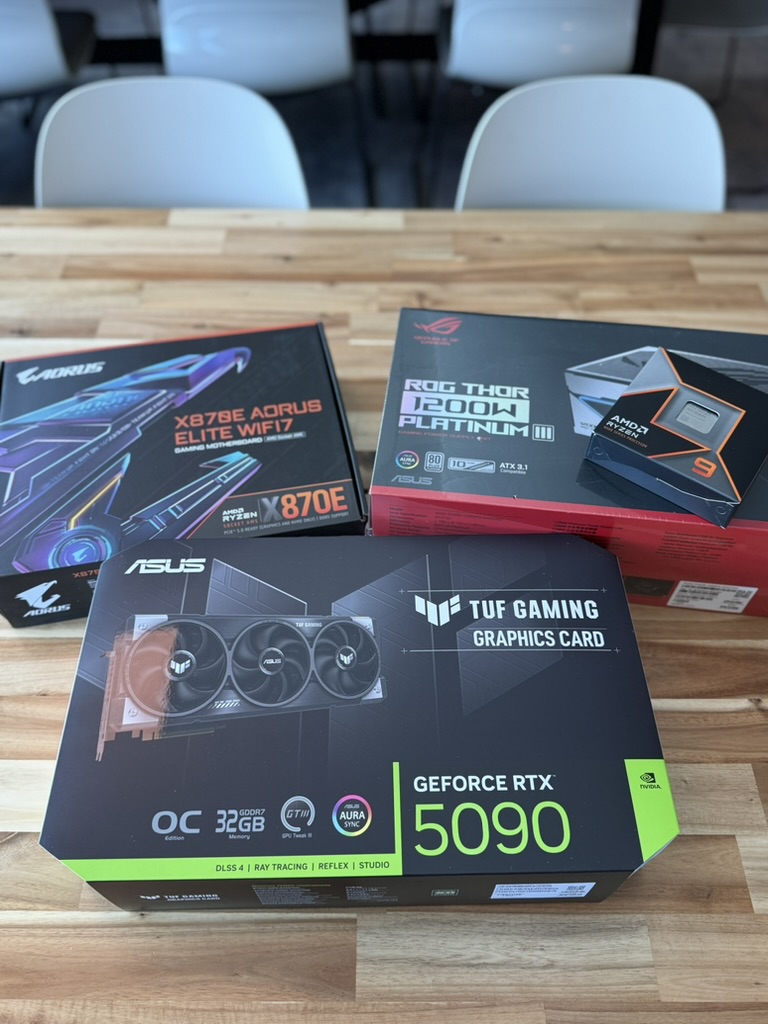
The box arrived. Let the fun begin.
There's something nostalgic about ordering physical hardware in 2026. For years, every infrastructure conversation has ended the same way: cloud, SaaS, scale horizontally, don't touch anything you don't have to. And that's mostly right.
But sometimes you need to own the thing.
This week, we took delivery of the hardware that will power Skynet — our internal AI agent operating platform. Yes, it's named after the Terminator villain. Yes, Helge, our CTO, is very pleased with himself about that.
What Is Skynet?
Skynet is not a product. It's not a feature. It's an operating system for building, deploying, and running a workforce of AI agents across Quantfolio.
Helge has spent the last quarter developing and tuning this platform — and it's reached a level where agents are now working autonomously. Around the clock. Without being asked.
Here's what that looks like in practice:
- Agents pull the latest branch from GitHub
- Each spins up its own local, isolated environment — a personal AI workspace
- They run the full development cycle: scan logs, identify bugs, analyze root causes, test with their own browser, implement fixes, and deploy
- They generate structured reports throughout
- When no bugs are found, they move to backlog items and keep shipping
Helge acts as the domain expert — reviewing output, QA-ing the work, and controlling what gets merged to the master branch. The humans stay in charge of quality. The agents handle the volume.
Not Just for Tech
The real ambition with Skynet is broader than the engineering team.
We're building this as a platform that every function at Quantfolio — Sales, Customer Success, Product, Finance — can use to create their own workers. The interface and tooling are being designed so that building an agent doesn't require being an engineer.
Each team will be able to define what their AI workers do, train them against their domain, and deploy them alongside the human team. This is what we mean when we talk about being an AI-first company. Not using AI tools. Building an AI workforce.
Why Own the Hardware?
Fair question. The default in 2026 is to rent compute, not buy it. And we're not abandoning external services — we'll still be heavy users of cloud infrastructure and third-party APIs.
But there are specific reasons we're bringing some capacity in-house:
Control over internal data. Some of what our agents will work with is sensitive — internal systems, proprietary logic, customer-adjacent data. Running that through external APIs introduces complexity and risk we'd rather not carry.
Cost management at scale. When agents are running continuously — not occasionally, but 24/7 — the economics of rented compute start to look different. Owning hardware for baseline workloads is a sensible hedge.
Infrastructure as a strategic asset. If AI is genuinely central to how we operate, then the infrastructure that runs it matters. Outsourcing that entirely feels like outsourcing something important.
This is not a move away from the cloud. It's a recognition that for an AI-first company, some things are worth controlling directly.
Where We Are
The hardware is in. Skynet is running. Agents are already shipping work.
This is still early — we're learning what works, what the right human-agent handoffs look like, and how to scale this thoughtfully across the company. But the foundation is solid, and the direction is clear. These boxes will take us only to a certain point, and Helge's wish list to Santa will be long this year. Anyone who wants to donate a NVIDIA H200 let me know 😇
Massive credit to Helge for building this from the ground up over the last quarter. The ambition was to have AI working as a genuine part of the team — not as a productivity tool, but as a workforce. That's what we're building.
More updates as Skynet evolves. The agents are already watching the logs. 🤖